Finding the direction
From the start, we knew we wanted to make a game about building up a landscape and watching it grow. After Randomine was cancelled, I was wary of running into the same scope problems on Preserve. I wanted to keep the scope small enough that we could polish it, so I suggested taking inspiration from board games. That gave us a first idea to test: placing cards on a hex grid and scoring points based on what was next to them.
I built the first prototype for Preserve to test that idea. I went on to design and program the core systems for cards, animals, and map expansion.
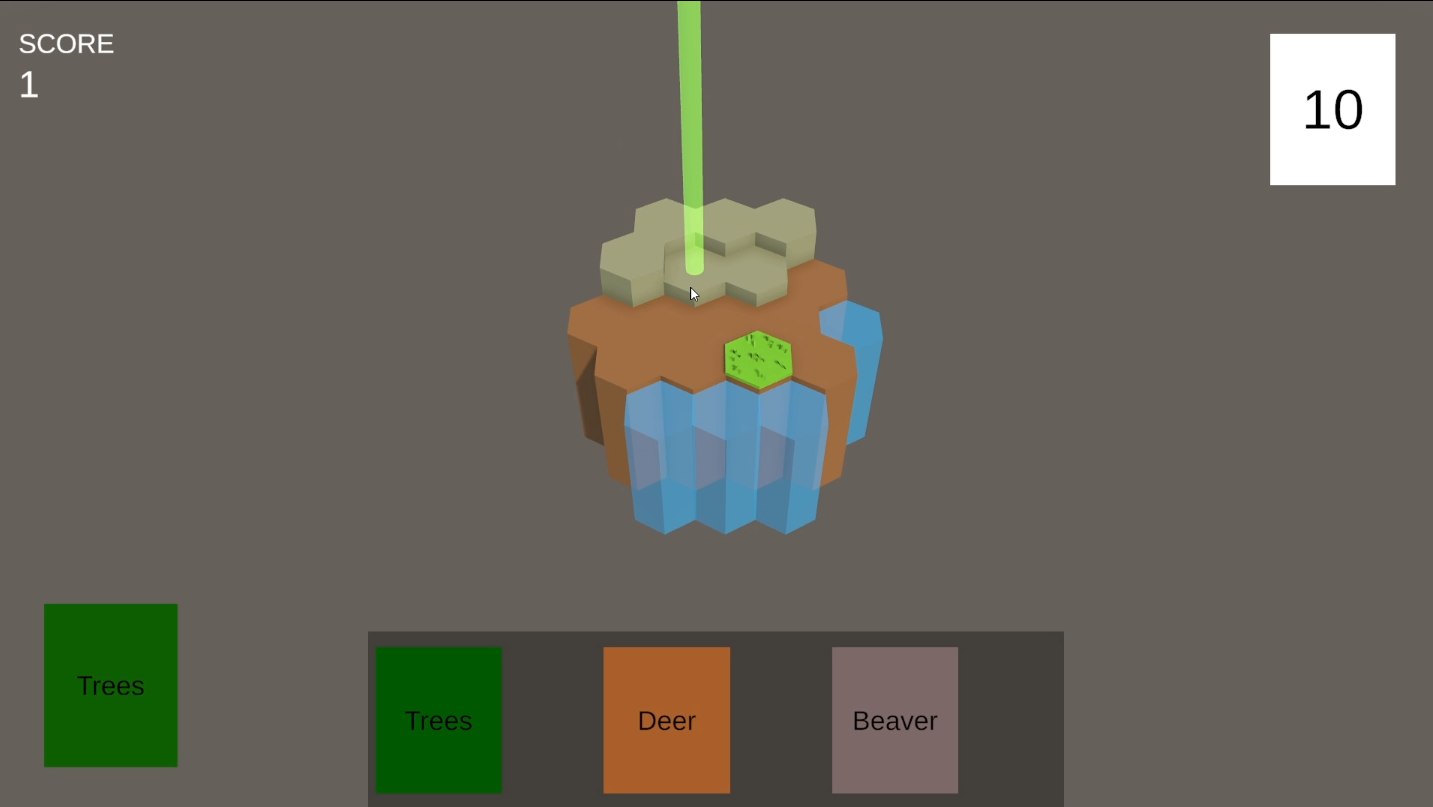
When I made the prototype and started testing it, the deck felt very limiting. The random draw could easily leave you without the cards you needed to keep going. That gave the game a feeling of scarcity and struggle. We wanted players to feel free to create and expand nature. After the team tried the prototype, we decided to drop the deck and keep the board-game feel. From then on, Islanders and Dorfromantik became bigger influences.

Dropping the deck, keeping the cards
The next step was to get rid of the deck. In the second prototype, players earned actions by completing objectives. We used a weighted system behind the scenes to make it less likely that players would end up with too many cards they couldn’t use.
For instance, if the player had been dealt a lot of trees, they might have built a lot of forest habitats. A bunch of animals that couldn’t live in forests would leave them with cards they couldn’t use. The system made animals that could live in forests more likely to be dealt. It also made a card much less likely to come up again if the player already had too many copies in their hand.
The weighting was a compromise, and it made the game more enjoyable to play.
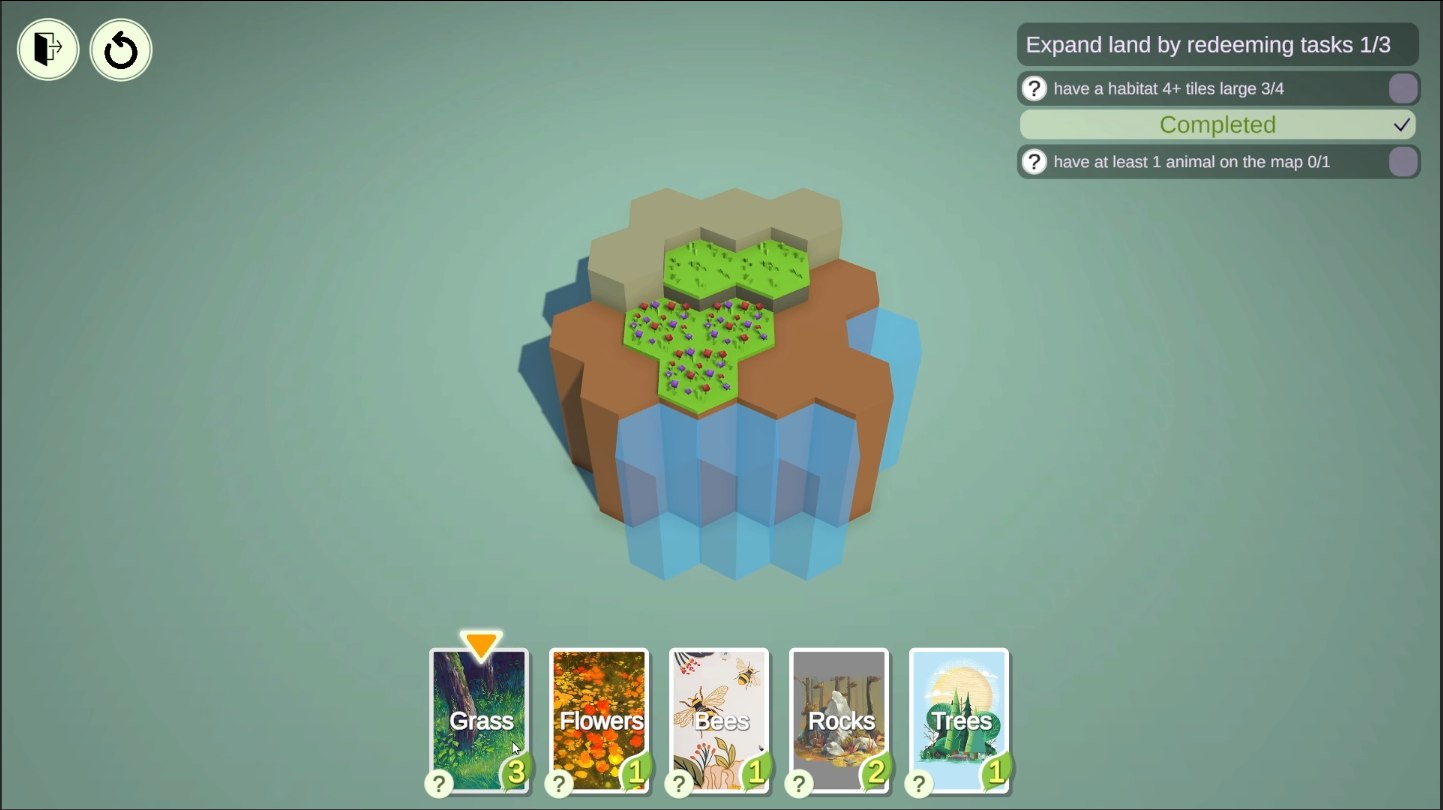
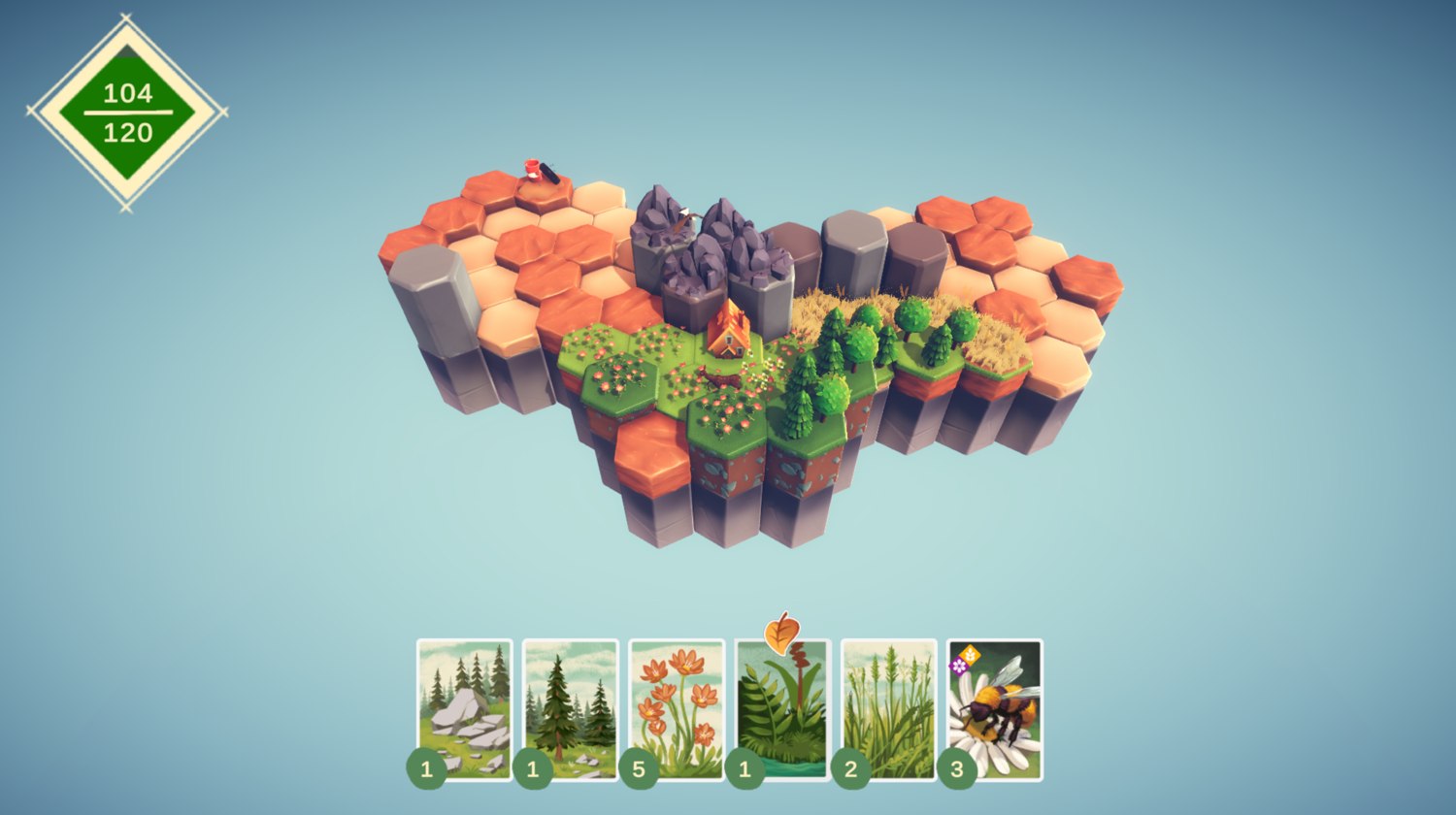
We replaced objective-based milestones with point-based milestones. That made it easier for us as designers to know how far the player would have progressed by the time they received their next cards. It gave us more control over the pacing, and players had more freedom to place things the way they wanted while still making progress toward the next milestone.
We brought objectives back later as longer-term goals. There were only two or three per level, depending on its size, and completing them unlocked late-game mechanics.
We kept the actions as cards in the final game because we liked how they felt in play and how they gave the game a board-game look.
From habitat simulation to cozy puzzle
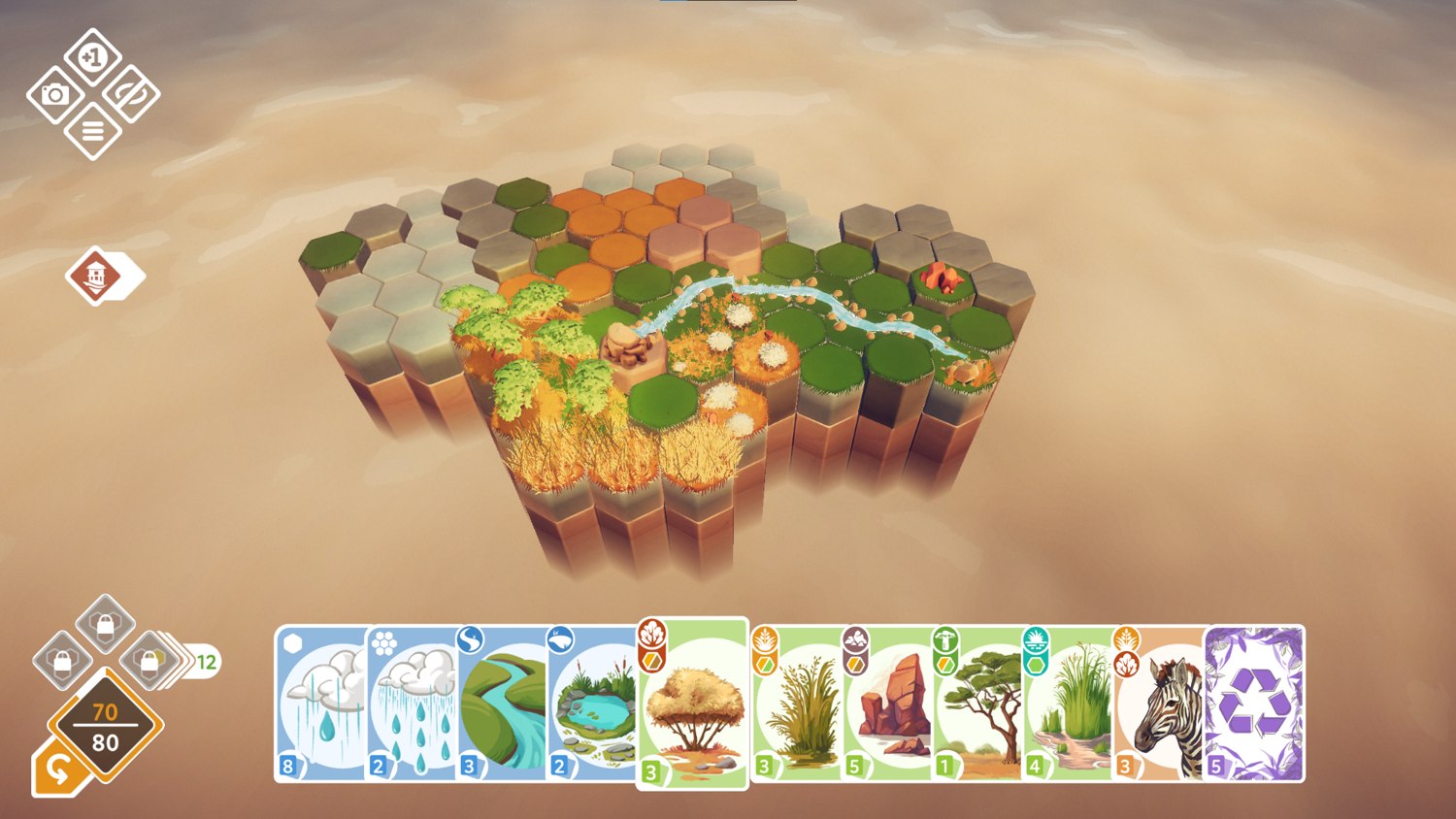
The next big question was what role animals would play. At this stage, we were still prototyping a kind of nature simulation. Players created habitats by combining nature tiles of the same type that met certain placement conditions. At first, you could only place one animal in a habitat. As the habitat grew, the animals multiplied automatically.
The scope started to grow again. We were already thinking about simulating habitats and combining them to create different conditions for animals.
This was probably the most important decision we made during development. We decided to focus on how the game felt. We wanted players to enjoy watching nature grow into a landscape they’d built, so we focused on making a cozy puzzle game for people who enjoy a more relaxed experience.
I started looking for things we could simplify so we could keep development manageable and focus on that cozy feeling. My co-designer agreed that asking players to spend too much time working out the best move would get in the way, so we simplified the placement rules and scoring.
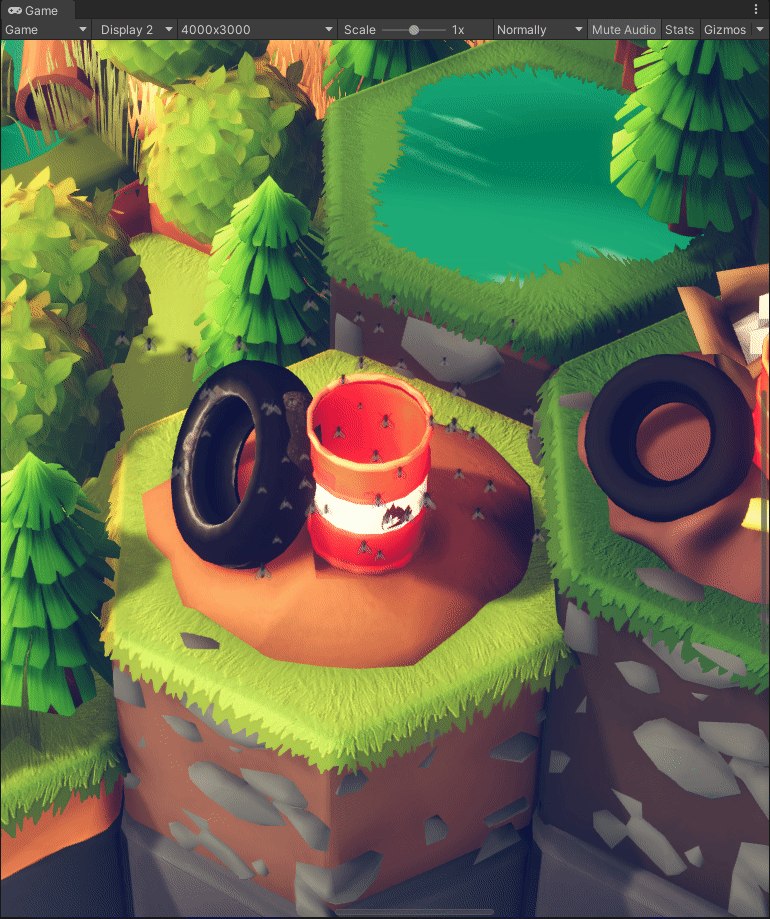
At one point, a pollution mechanic came up as a way to make the game more interesting. I felt it would pull the player’s attention away from growing habitats and watching animals thrive. Cleaning up pollution would become the focus, which would pollute the cozy experience (pun intended).
Simplifying the rules
We removed choices where we could so players could focus on where to build and expand habitats and when to place animals.
One example was tile improvement. We simplified it to three levels. A tile scored 1 point for grass, 2 points for a natural improvement such as trees or flowers, and 3 points once it became part of a habitat.
We switched to placing animals individually, with a limit of three per habitat and 10 points per animal. Completing a habitat with three animals of the same kind gave you a 30-point bonus. Three different animals gave you a 60-point bonus. Other combinations only earned the base points.
Sometimes you might take the 10 points now to reach the next milestone. Other times you might risk waiting so you can finish the habitat with a bigger bonus.
We used more expansions, made them smaller, and gave them to the player at a steady pace. Each expansion gave you a manageable number of new tiles to think about and made the blank canvas feel less overwhelming.
Biomes and the weekly challenge
We had the tighter game we were aiming for. We still worried that players might feel they’d seen everything after a few hours.
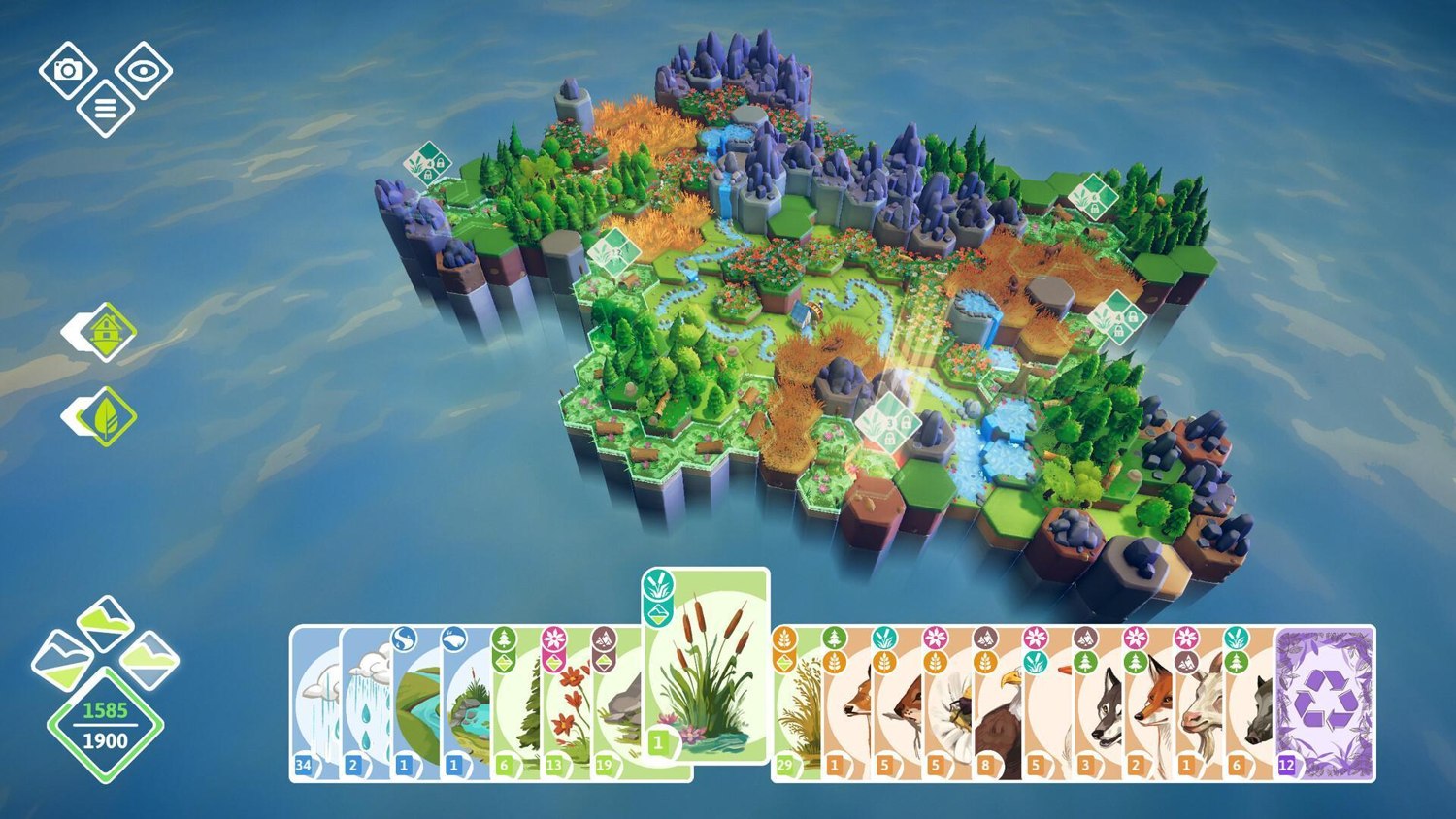
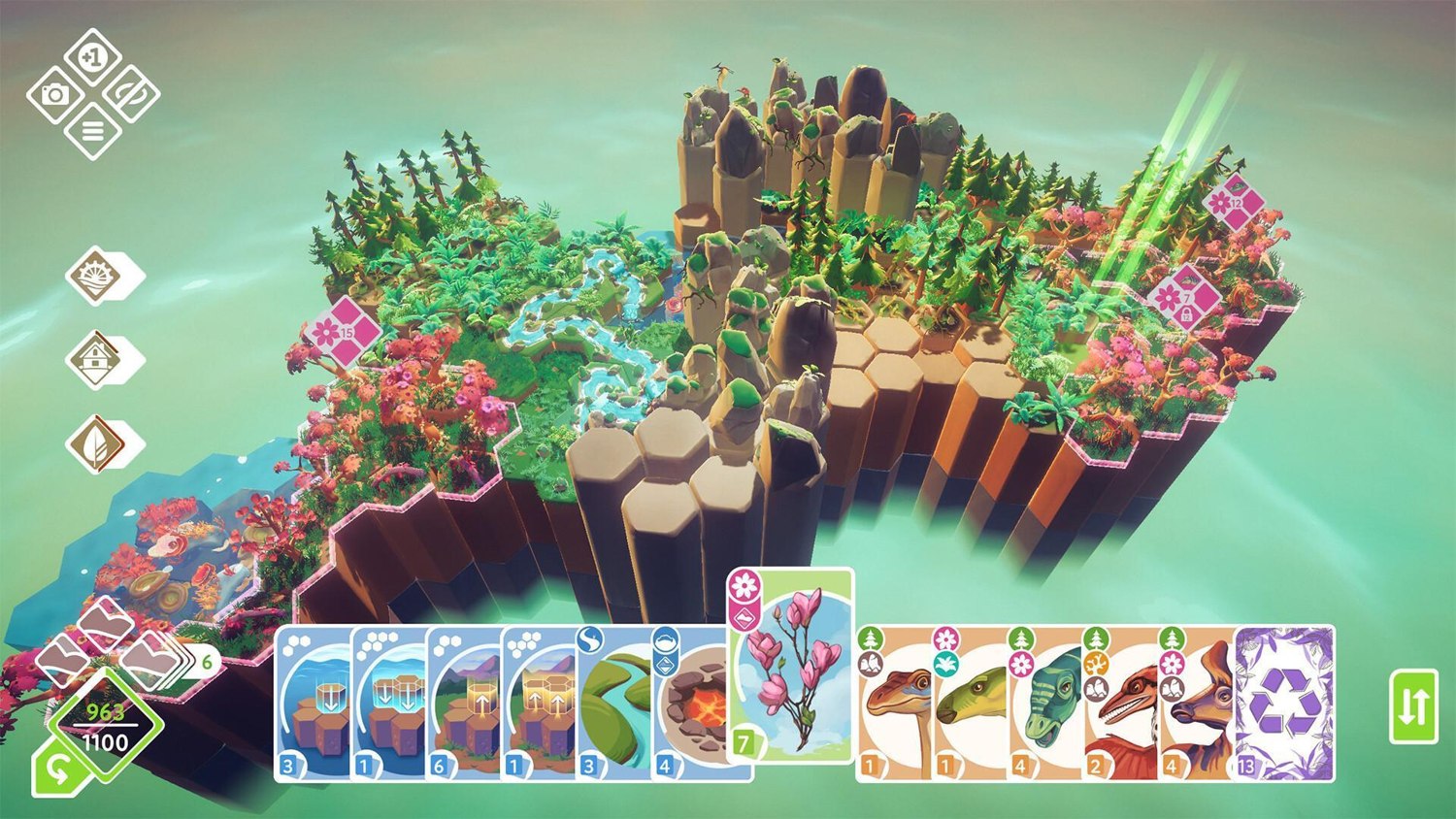
We added biomes with different looks, animals, and habitats. Each biome also had its own mechanic, and we kept those mechanics simple to understand.
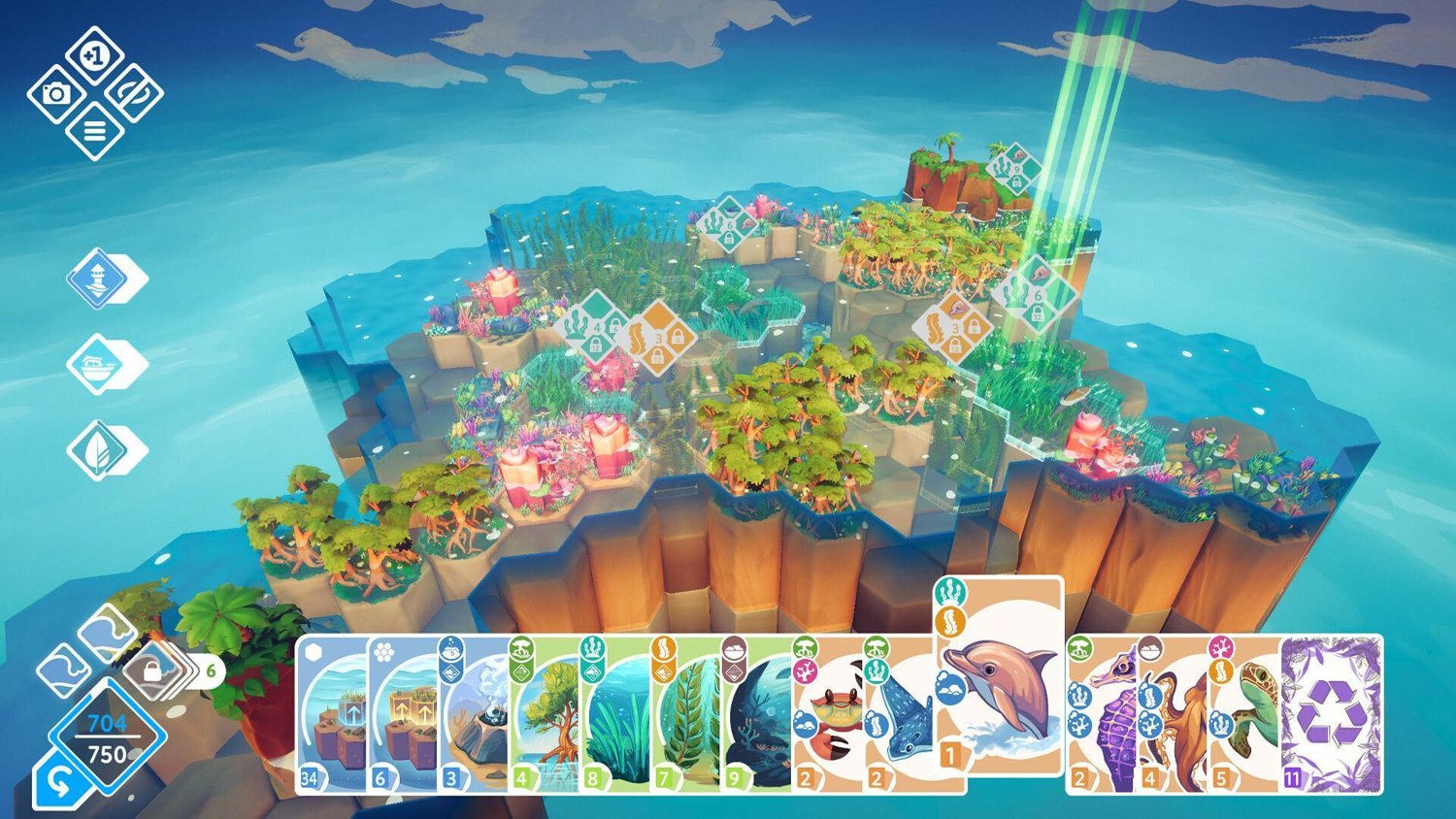
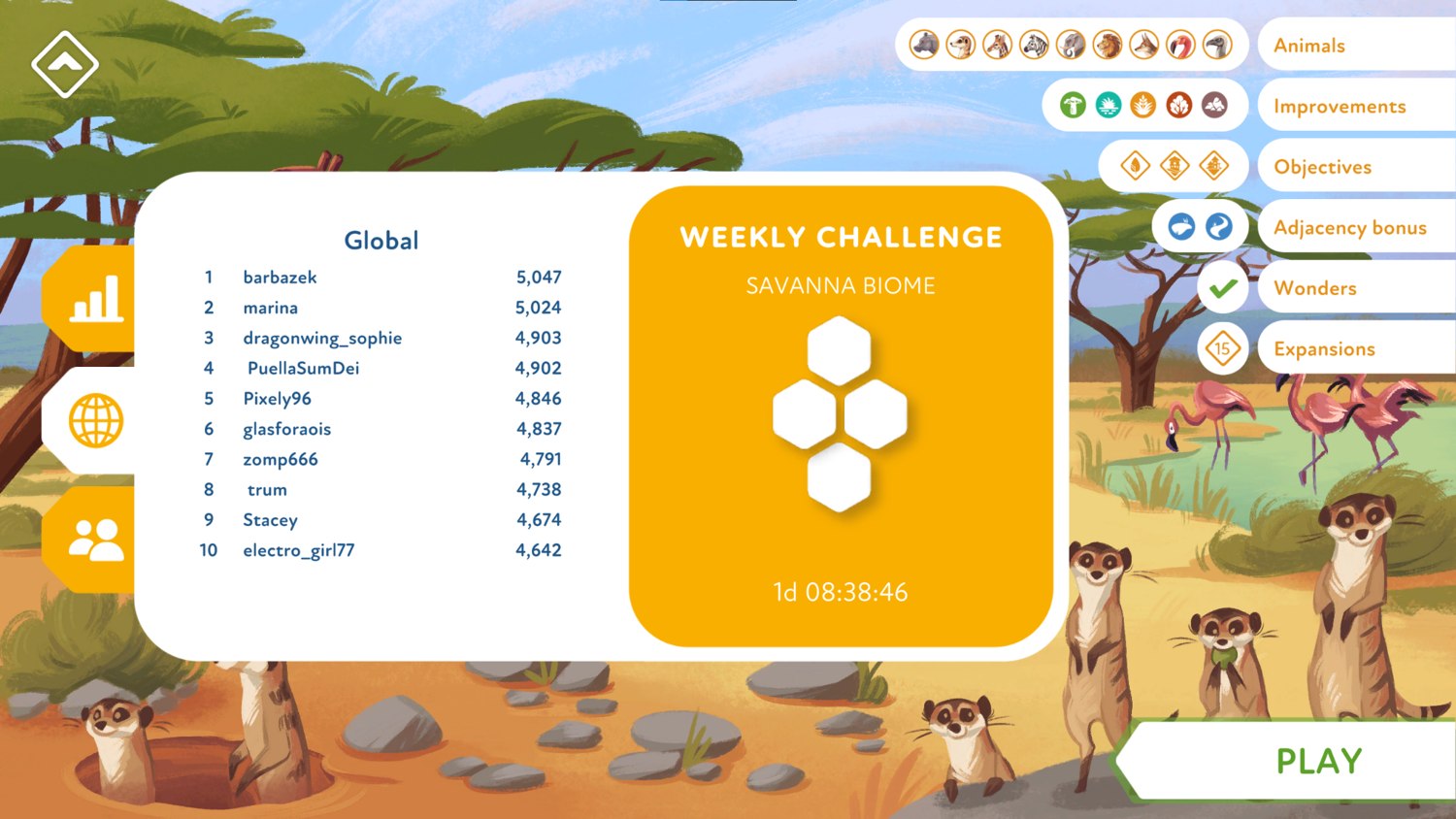
The weekly challenge
By then, we had about 15 hours of gameplay. The last challenge was player retention. We knew players wanted an infinite mode. Technical limitations kept us from adding it, so I proposed finding another way to give players a reason to come back. We agreed on a weekly challenge.
The leaderboards and weekly challenge helped build an active community. Players were still competing in the weekly challenge months after the 1.0 release, which surprised us for a game of this size.